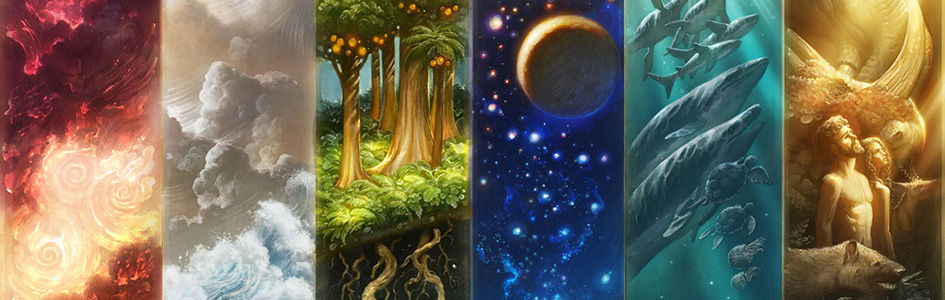
Exploring the Intersection: How Artistic Expression Influences Scientific Discovery
The interplay between artistic expression and scientific discovery has always been a fascinating subject. Throughout history, many of the greatest scientists have been inspired by art, using its principles to inform their research and methodologies. For instance, renowned physicist Albert Einstein once stated, 'Imagination is more important than knowledge.' This highlights how creativity in art can lead to groundbreaking innovations in science. By embracing the aesthetics of nature and employing artistic techniques like visualization, scientists can better communicate complex ideas, making them more accessible to both the public and to fellow researchers.
Art and science converge in various fields, such as biomimicry, where artists and scientists collaborate to glean insights from nature's designs to solve human challenges. As scientists study patterns and behaviors in ecosystems, artists illustrate these findings, making science relatable and engaging. This synergy not only fosters greater public interest in scientific endeavors but also enhances the creative process within the scientific community itself. By exploring this unique intersection, we can understand how artistic expression can significantly influence scientific discovery, leading to a more holistic understanding of our world.
Counter-Strike is a popular first-person shooter game that focuses on team-based gameplay, where players assume the roles of either terrorists or counter-terrorists. The game has evolved through various iterations, with Top 10 mobile content creation gear being essential for players looking to stream or create content effectively. Its competitive nature has turned it into a staple of the esports scene, drawing in players and spectators worldwide.
The Scientific Method as Art: Understanding Creativity in Research
The Scientific Method is often perceived as a linear process, but it's important to recognize its artistic dimensions. Creativity is at the heart of research, driving scientists to formulate hypotheses and envision experiments that push the boundaries of knowledge. When we delve into the scientific process, we see that it involves not just observation and analysis, but also imagination and intuition. This interplay between creativity and science is what allows researchers to uncover new insights and innovate solutions to complex problems.
Moreover, understanding the creative aspects of the scientific method can inspire new generations of thinkers. By fostering an environment that encourages experimentation and curiosity, we can empower young scientists to view research not just as a set of steps to follow, but as a canvas for exploration. In this context, scientific inquiry becomes an art form—one that blends the rigor of methodology with the freedom of artistic expression, ultimately enriching our understanding of the world.
What Can Artists Learn from Scientists? Insights into Innovative Thinking
Artists and scientists, though seemingly worlds apart, share a common foundation in innovative thinking. Both disciplines thrive on curiosity and exploration, constantly seeking to push boundaries and challenge existing paradigms. For instance, artists can learn from the scientific method's emphasis on experimentation and iteration, which encourages a cycle of hypothesis, trial, and revision. This approach allows artists to explore new mediums and techniques without the fear of failure, understanding that each misstep can lead to unexpected discoveries and richer creative expression.
Furthermore, scientists often rely on collaboration to generate breakthrough ideas, a practice that can be immensely beneficial for artists as well. Engaging with colleagues from diverse fields can inspire fresh perspectives and innovative solutions to creative challenges. By fostering a culture of interdisciplinary collaboration, artists can expand their horizons and drive their work in new directions. As the acclaimed physicist Albert Einstein once stated, “Creativity is intelligence having fun,” highlighting that merging the analytical with the artistic can yield powerful outcomes.