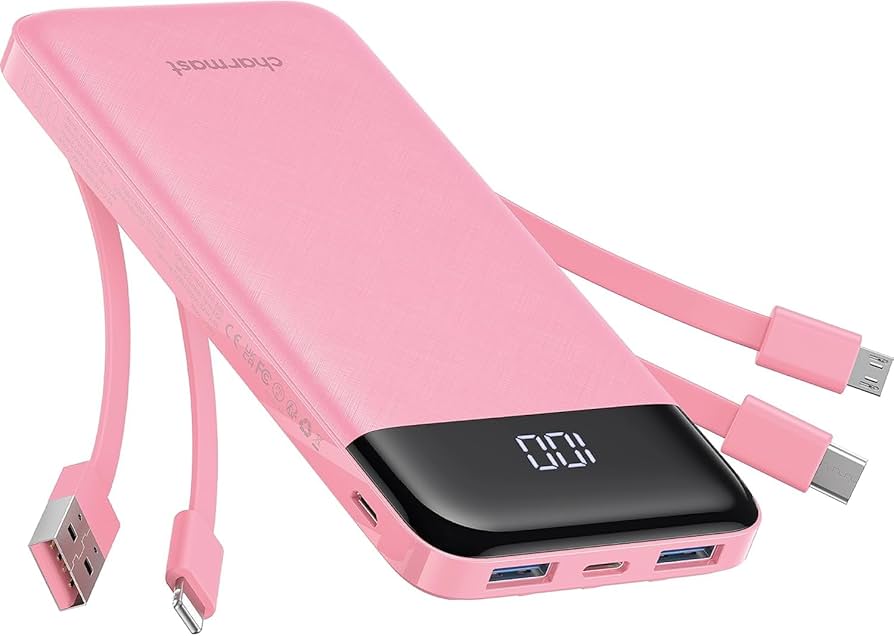
How Portable Chargers Work: A Deep Dive into Their Inner Mechanics
Portable chargers, also known as power banks, have become an essential accessory for modern devices, ensuring that your smartphone, tablet, or other electronic gadgets stay powered throughout the day. At their core, these devices operate on a simple yet effective principle of energy storage and transfer. They consist of a battery, typically lithium-ion or lithium-polymer, which stores electrical energy that can be transferred to your devices through a USB output. When you plug your device into a portable charger, electrons flow from the charger’s battery into your device's battery, replenishing its power supply.
To elaborate on the inner mechanics of portable chargers, they generally include an input port for charging the power bank and one or more output ports to connect your devices. Many advanced models come equipped with digital displays indicating the remaining charge, voltage, and current output, ensuring optimal charging conditions. Furthermore, they often feature smart charging technology that detects the optimal voltage and amperage for compatible devices, thus enhancing charging efficiency without overheating. Whether you're on the go or encountering a power outage, understanding how portable chargers work can help you choose the right one that meets your power needs.
Counter-Strike is a popular multiplayer first-person shooter game that emphasizes team-oriented gameplay and tactical combat. Players can choose to be part of either the Terrorist or Counter-Terrorist teams, competing to complete objectives such as bomb defusal or hostage rescue. In addition to gaming gear, players often look for the best accessories for their devices, including Top 10 magsafe chargers to ensure they stay powered up during intense matches.
Choosing the Right Portable Charger: Key Features to Consider
In today's fast-paced world, a reliable portable charger is essential for keeping your devices powered up on the go. When choosing the right portable charger, consider key features such as the capacity, which is measured in milliamp hours (mAh). A higher mAh rating means more power, allowing you to charge your devices multiple times. Additionally, it's crucial to check the output power, usually measured in watts (W), as this affects how quickly your devices will charge. Look for chargers that offer fast charging capabilities to save time, especially for larger devices like tablets.
Another important factor is the number of ports your portable charger has. If you often charge multiple devices simultaneously, opt for a model with at least two USB ports. Portability is also key; lightweight and compact designs are ideal for travel. Finally, consider safety features such as short-circuit protection and overcharge prevention, which provide peace of mind when using your charger. By evaluating these features, you can ensure that you choose the right portable charger that meets your needs and keeps your devices powered when you need them the most.
The Future of Portable Charging: Innovations on the Horizon
The landscape of portable charging is on the brink of a major transformation, thanks to rapid advancements in technology. One of the most exciting innovations on the horizon is solid-state batteries, which promise to deliver greater energy density while being safer and more environmentally friendly than traditional lithium-ion batteries. These batteries not only charge faster but also have a longer lifespan, which could potentially reduce the frequency of charging needs on-the-go. In addition, flexible solar panels are being developed, allowing users to harness solar energy anywhere, making portable charging more accessible, especially in remote areas.
Moreover, advancements in wireless charging technology are set to revolutionize how we interact with our devices. Future portable chargers may utilize magnetic resonance to charge multiple devices simultaneously without the need for physical connections. This innovation will streamline the charging process and enhance user convenience. As we look ahead, the integration of AI in portable charging solutions could optimize energy consumption, making it more efficient by predicting device usage patterns and adjusting charging speeds accordingly, which could be a game-changer for tech-savvy consumers.